
What Are the Biggest Tech Trends for 2026?
Predictions for AI, Space, Quantum Computing & Beyond
Looking at the tech landscape, if 2025 was anything to go by, 2026 is going to be ‘2025 on steroids’. We are headed toward acceleration and further scaling of AI technologies, such as autonomous AI agents handling complete workflows with near-human fluency and the urgency to create more energy to power data centers.
There is no sureshot way to predict the future. That nasty pandemic showed us that. But, I have a working hypothesis that most changes in the tech industry in 2026 will be incremental. Linear, even.
They might appear to be big leaps when they materialize. Yet their foundations would have been set in the years prior, particularly 2024 and 2025. Perhaps my perspective differs from some of the eager narratives about the transformative shifts expected in 2026. We will only know for sure at this time next year.
There will, however, be one exception to this incremental trend. Space-Tech! For multiple reasons mentioned later in the Space section in this article (I’ve saved the most exciting for last), Space will capture mainstream attention in 2026. In big ways!
Top Tech Trends in 2026
The following points represent the most significant trends in 2026. As mentioned earlier, most continue paths already well-established this year, such as the first point below on Artificial Intelligence. Others such as space signal more meaningful breakthroughs.
Let’s dive in.
1. AI Bubble Talk and Real Talk
First, I want to acknowledge the elephant in the AI room.
Yes, we will still be discussing this in the entry months of 2026 at least. There are many mixed opinions on whether there is an AI bubble…….bubbling! In fact, AI stocks have been in correction territory for the last few days. Let’s see if that slide continues.
Former CEO of Amazon, Jeff Bezos described it as an ‘industry’ bubble which may not be as insidious as the financial bubble of 2008. It’s a perspective worth listening to - linked here.

While some might argue that the extremely high levels of investment in AI initiatives, stocks and startups is not commensurate with the current level of AI output or its contribution to profitability, what is indisputable is that progress in AI, especially Generative AI, is one of the most remarkable innovations ever. Make no mistake, it is here to stay.
At some point in 2026, we can expect that the much-discussed ‘bubble’ will burst and we will experience a period of economic stress. Or the productive contribution of AI to our work, lives and financial bottom lines will level up to the order of investment. Either way, we should have some resolution on this in 2026. Hopefully, it is a favorable one.
Real AI Talk
I am using the word ‘real’ only to distinguish other AI topics from bubble talk. Throughout 2024, consumers and organizations experimented with Generative AI (GenAI) to test whether it could indeed enhance their personal and professional productivity.
In 2025, adoption moved from experimentation to more regular usage. Organizations began scaling AI programs.
In 2026, we will witness broader adoption and more uniform, enterprise-wide AI integration across tasks, processes and functions beyond 2025 levels.
2026 will also be the year of reckoning, when the consequences of broader and deeper AI adoption will be felt, both in terms of positive and negative impact.
In addition, these are some of the AI domains that will see expansion in 2026.
AI Agents; from demo to deployment
One of the areas of AI usage in 2025 has been Agentic AI or developing and using AI Agents. AI Agents are already evolving from doing only conversational tasks toward more autonomy, i.e. able to independently complete different work tasks by applying a series of steps that a human would ordinarily take. From “AI helps me do my tasks” to “AI does some of my tasks.”
This autonomous AI Agent trend will heighten steeply in 2026 with AI Agents taking on entire end-to-end workflows such as in travel planning, shopping and even executing certain types of financial transactions for more organizations than ever before.
Humanoid Robots and Physical AI
In 2025, a whopping $1.2 trillion went toward applying AI-driven robotics to building and expanding production capacity in US manufacturing. AI-enabled robots can now support human workers in factories to complete various physical tasks. This trend will increase in 2026 as humanoid robots transition from R&D to production.
AI-powered robots will proliferate across
Expanding robotaxi services (already available in some parts of the US and world)
Construction sites
Restaurants and offices
Healthcare facilities and senior living
Defense applications

AI as a tool to AI as infrastructure
….like the Internet or Electricity, which are a part of the infrastructure that our home and work lives run on. In 2026, AI will integrate much more into our daily routines and rituals.
We are seeing a lot of it already. To illustrate the idea of AI as infrastructure, here’s an example. Let’s say, previously, you opened your Gmail account and saw a long email. You didn’t have time to read it. You copy-pasted it into ChapGPT or other chosen LLM and asked for a summary. This is use of AI as a tool.
Today, Gmail automatically displays a summary of your email exchanges at the top! It’s now embedded into Gmail; i.e. AI as infrastructure. Gmail has also started suggesting drafts of replies……not my personal style as yet but maybe I’ll cave and use it one fine day in the future!
We will see more of this type of AI-powered default working seamlessly behind the scenes. As it becomes ‘infrastructure’ which is always on and processing in the background, paradoxically it becomes less visible than it is right now. Kinda like you plug in your brand new toaster and just assume that it will work because of the invisible electrical infrastructure that is powering it.
AI Sovereignty
There are many interpretations of this term. What I mean by ‘AI sovereignty’ is the race by governments to manage and secure their AI capabilities. As mentioned in a recent Bain & Company report, “Key cutting-edge domains—semiconductors, AI, communications, quantum computing, and biotechnology—are no longer just catalysts for innovation and economic growth, but conduits for countries’ political power, national security, and strategic advantage.”
To reduce the over-reliance on Taiwanese fabs (over 60% of chip production takes place on the island of Taiwan), among other reasons, the US introduced policies such as the US CHIPS Act (2022) which “provides funds to support the domestic production of semiconductors and authorizes various programs and activities of the federal science agencies.” This program provides $52.7 billion in funds to develop the American semiconductor industry. Consequently, AI companies including NVIDIA and Taiwan Semiconductors are establishing manufacturing of advanced AI chips in the United States.
The European Union (EU) and other countries are making similar attempts to develop AI capabilities in their home countries. The European Chips Act (2023) “will bolster Europe’s competitiveness and resilience in semiconductor technologies and applications’. China is investing billions in expanding domestic semiconductor manufacturing capacity, among other such initiatives to establish self-reliance in AI.
Another reason for this international race to shore up AI at home is due to the recent tariff wars and export controls. As a result, the AI supply chain which developed globally is starting to become more region-alized and fragmented. We will see more of this fragmentation in 2026.
A note on AI regulation - There have been discussions and attempts in the United States and other countries about the need to regulate AI. The EU passed the EU Artificial Intelligence Act, “the first comprehensive regulation on AI by a major regulator anywhere”. The legislation took effect in 2024 with implementation that started in 2025.
As deepfakes, cybersecurity and other AI-related risks escalate, governments will have to step in and put some laws in place. Historically, the United States has been slower in regulating the broader technology industry. Personally, I am skeptical that comprehensive AI regulation will come to pass in the United States in 2026. Perhaps in subsequent years.
2. Commercialization of Quantum Computing
In simple terms, quantum computing is a method of computing that uses qubits instead of bits, as classical computing does, to process information. In addition to using different underlying units, quantum computing can process information much faster by testing millions of possibilities simultaneously instead of one-by-one as in conventional computing.
OK, so definitions aside, why is this a big deal? Due to its highly advanced capabilities, quantum computing can be used for specialized tasks related to sophisticated financial modeling, drug discovery and supply chain optimizations. It’s not that classical computing cannot tackle these issues. But, when these problems start to require the processing of complex mathematical structures at scale to find solutions, quantum computing can tackle them much faster and more effectively.

However, with quantum computing’s high-octane productivity comes a dark side. It can also be used for speedily breaking encryptions which protect our bank accounts and privileged government information. In other words, the good actors who apply quantum computing will have to stay a few steps ahead of the bad actors at all times.
There were huge advances in quantum computing in 2025. IBM, Google, Microsoft and some others, all of whom are working on quantum systems, reported substantial improvements in processing speed and scale.
In 2025, quantum computing started transitioning from the laboratory into the market. The initial steps toward democratizing quantum computing for use cases in pharma, finance and government were taken by some early adopters.
Like cloud computing did some years ago, quantum computing will fundamentally change the way that businesses operate. In 2026, we will see more commercialization of quantum computing with additional use cases and platform customers.
Today, the quantum computing market generates about $1 billion in annual revenues. It has potential to reach $198 billion by 2040, based on some predictions. In addition to the larger tech players, there are new quantum computing companies that are becoming more well known such as IonQ, D-Wave and SpinQ. Some of these are already public or planning to go public in 2026, which will unlock this sector for more investment and faster innovation.
The AI and quantum computing revolutions naturally leads us to consider a pressing challenge viz. how to power all this advanced technology.
3. Energy Demand and Alternate Solutions
According to the Energy Information Administration (EIA), which is an independent federal authority on energy statistics, demand for energy in the United States is projected to hit a record 4,267 billion kWh in 2026 compared to a high of 4,199 billion kilowatt hours (kWh) expected by year end in 2025.
This increased demand comes as no surprise to anyone. We know that the rapid growth in AI usage and the construction and operation of data centers to fuel AI needs is driving higher energy consumption.
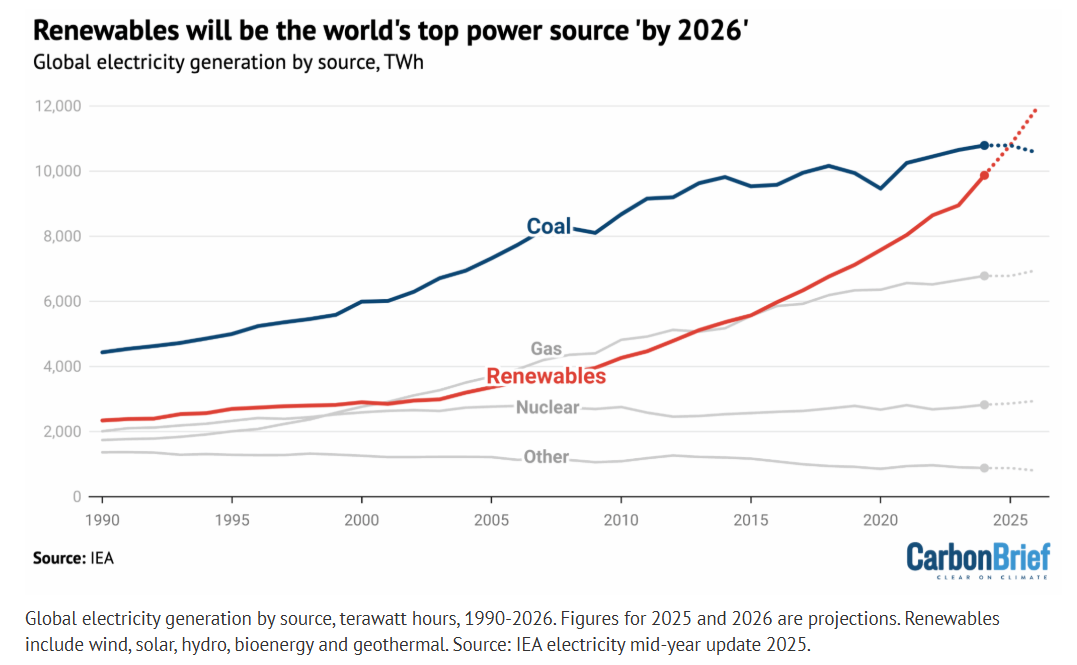
What this trend means is that in 2026, we will see most of that excess energy demand fulfilled through renewable energy sources such as wind and solar. The International Energy Agency (IEA), an authority on global energy data and analysis, predicted that “Renewables are poised to surpass coal-fired generation” by 2026 “at the latest”.
The IEA also forecast that nuclear power generation will continue to rise and hit records in 2026. AI companies will feel intensifying pressure from their stakeholders and regulators to become energy-efficient as more startups emerge to deliver alterative solutions.
While this will not reduce our household or business utility bills in 2026 (they will likely continue to rise in most regions), it is better news for innovation and investment. The energy challenge is spurring a new wave of clean tech innovation that will benefit industries far beyond AI.
4. Advancements in Biotech
There were at least two major breakthroughs in biotech in 2025 related to CRISPR and AI.
In simple terms, Clustered Regularly Interspaced Short Palindromic Repeats (CRISPR) is a gene-editing technology that can help us cure many diseases in a personalized manner. The discovery process started in the late 1980s but it took a while to develop it more fully. Until 2025!
In 2025, the first personalized CRISPR therapy was administered to a single patient, an infant, in Pennsylvania in May. The treatment worked! Now that the model has been proven, we will see more bespoke therapies in 2026.
Thousands of previously untreatable diseases can now be treated. This is a BIG DEAL! We will also see FDA protocols evolve around this as it clears regulatory tracks for personalized therapies in 2026.
Adding AI capabilities in the trend mix, researchers at MIT used GenAI to design new antibiotic compounds. This was another major leap in medicine as these AI-designed therapies go to clinical trials in 2026 and start saving lives by tackling previously drug-resistant bacteria. In 2026, we will also see the AI approach applied to other diseases and drugs.
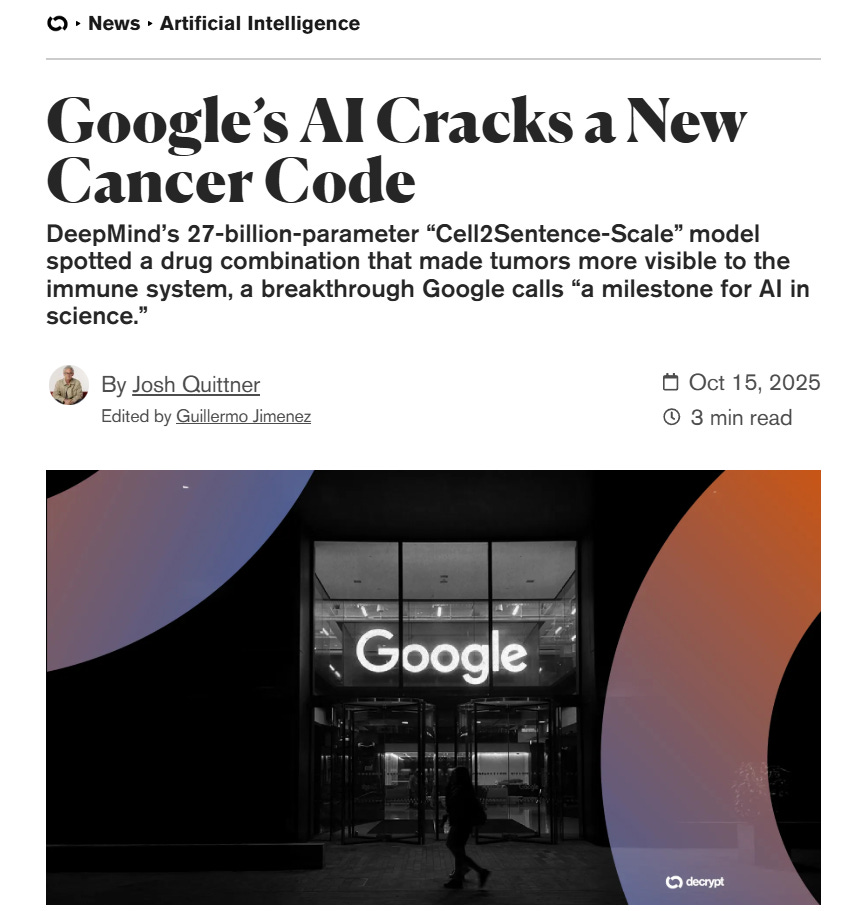
Google’s DeepMind, in collaboration with academia, released CRISPR-GPT, an AI copilot that guides gene editing experiments. DeepMind also used AI to generate and validate a new hypothesis for cancer treatment. Another trend that will speed up in 2026; i.e. the use of AI to analyze biological data and develop hypotheses for drug development.
The application of AI has dramatically compressed drug discovery and treatment development timeframes. What previously took years or decades can now take just months. Also, more researchers can get access to expert-level capabilities. Biotechnology startups can now compete with pharmaceutical giants more equitably, as AI and CRISPR technologies have leveled competitive landscapes.
5. Space-tech
“To confine our attention to terrestrial matters would be to limit the human spirit.”
Stephen Hawking, Physicist and Cosmologist
Well, apparently many now agree. In my opinion, the biggest breakthroughs will be in the space-tech sector.
🎵“If you believed they put a man on the moon”🎵 Line from a popular 1992 song by Alternative Rock band R.E.M. (and I just dated myself with that one).
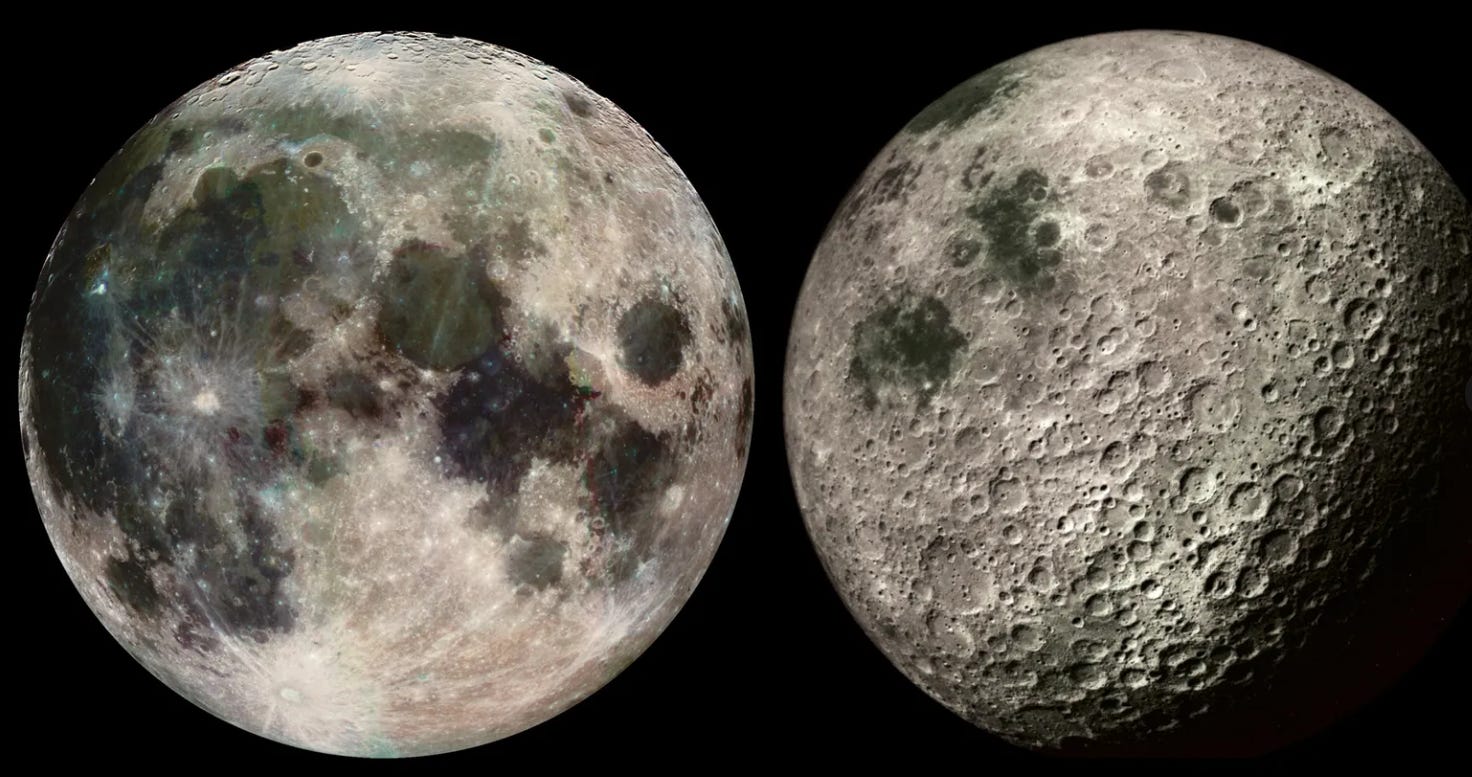
For starters, and different from the terrestrial tech we’ve been talking about in previous sections, humans return to the Moon with the Artemis III mission in 2027 (no, not 2026 although that was the original plan) 55 years after the previous landing in 1972!!! Why has it been that long? Well, due to a bunch of political, financial and other reasons. You can read about those here.
There is however another Moon mission planned for 2026, Artemis II, that does not include a lunar landing. Instead, astronauts will fly around the Moon to test spacecraft systems. This will be the first crewed mission beyond low Earth orbit since 1972. This event is currently scheduled to take place in the first quarter of 2026. You can read more about this mission to the Moon here.
Either way, the Moon missions are for the purposes of “scientific discovery, economic benefits, and build the foundation for the first crewed missions to Mars.”
2026 will be the year when humanity starts to explore space with more intention than in previous decades.
Now, here’s where the terrestrial and the cosmic converge.
Elon Musk’s SpaceX is closely involved in the planned lunar landing because it is developing the Starship Human Landing System (HLS) for the Artemis III mission. The astronauts are planning to travel to the lunar orbit on the Orion spacecraft and then transfer to Starship to reach the Moon’s surface.
Sounds complex? It sure is! But, they now have the technology to accomplish it. NASA is also considering support from Jeff Bezos’ space company Blue Origin and others to complete other space missions. Other nations including China are also planning crewed lunar landing in the coming years. Heavier traffic on the moon in the coming years!
To sum it up, 2026 will be the beginning of multiple missions into space as we earthlings explore the Moon, Mars and the Cosmos.
Data Centers in Space? Maybe not in 2026. But, developing the technology in 2026 that could make it possible in the next few years? Hell, yeah!
Celestial bodies aside, we might soon spot more man-made structures in space. As AI sucks up our limited earthly energy resources and real-estate, one of the ideas that has gained serious momentum is that of putting data centers in space. Elon Musk, Jeff Bezos and some others have publicly submitted the possibility in the last few months.
The contention is that data centers which house AI computing infrastructure could access unlimited, round-the-clock solar energy in space. On Earth, we can capture solar energy only 25-30% of the time when the sun is up.
So, will we see the first space-based data center in 2026? Unlikely. But, what we will see is the development and testing of technology that could support that idea such that data centers could launch in space in the following years.
Take the example of an upstart called ‘Overview Energy’ which achieved a power beaming capability that delivers or ‘beams’ energy from a moving aircraft flying at 3 miles altitude to solar panels on earth.
After validating this technology at a shorter distance from earth, the company aims to beam solar energy earthward via satellites positioned about 22,000 miles above Earth.
If you combine space technology developments such as this one with the reduction in space launch costs (still exorbitantly high compared to doing anything on Earth but far cheaper than they were some years ago), the vision of data centers in space some day soon is pretty realistic. And the year 2026 will be the one when it all begins.
The SpaceX IPO and the New Sector for Investment
You’ve likely heard of SpaceX’s anticipated IPO in 2026. While a date has not yet been set, the company is actively interviewing investment banks to bring it to fruition. At potential valuations ranging from $800 billion to $1.5 trillion, it could be one of the largest IPOs of all time. Note that these are target valuations speculated in the media and not yet confirmed.
So what does that mean? For SpaceX, a whole lot of course with that level of financial infusion. But, what it also does is increase the attractiveness of the space sector for further innovation and investment.
While SpaceX was not the first private space company to exist when it was founded in 2002, it has become the most successful ‘New Space’ company. It validated the idea that its type of commercial space model using different approaches could achieve scale.
It catalyzed other private New Space companies like Rocket Lab and AST SpaceMobile giving the sector a revised identity. Many of these companies went public in the 2019-2021 timeframe to mixed reception from investors.
If SpaceX goes public, given its track record, proven revenues, profitability and initiatives including Starlink, Artemis and proposed data centers in space, it would establish expectations for what a successful space company looks like, validate and refresh the sector’s viability, bust the assumption that New Space is a niche market and attract institutional investors.
To close the loop, space tech will see a strong spike in 2026.
So what (do these trends mean for us)?
I always ask myself this question when I am reading or writing or listening to any information….so what? The answer makes all the difference in whether I save it for future reference or allow it to fade from memory. So, let me answer this honestly.
It will not change your day to day life to know the trends. You may not even notice them as they are growing during the year.
But, year beginnings are when people think about how they want the rest of that year to unfold. Or even the next 3-5 years if you are one of those who plans life in increments.
If you’re making decisions about your career, investments, business strategy, then awareness about how certain trends could impact those decisions can be one way to plan and prepare for the future.
Thank you for reading this newsletter in 2025. I hope you will in 2026 too.
And most importantly,
Wish you a very Happy and Healthy New Year!
